Moment: Why So Many Couples Stop Having Sex (And How to Want Each Other Again)
In this episode, Dr. Maria Sophocles discusses practical strategies for reigniting intimacy and overcoming sexual burnout in long-term relationships. The conversation focuses on breaking down barriers, redefining pleasure, and improving communication to help partners rebuild desire and foster deeper connections.
Listen on
In this episode, Dr. Maria Sophocles joins the conversation to discuss reigniting intimacy and overcoming sexual burnout in long-term relationships. The discussion explores strategies for rediscovering pleasure, breaking down cultural and psychological barriers, and improving communication between partners. Listeners will learn practical ways to rebuild desire, embrace different forms of intimacy, and create stronger connections through open dialogue and shared experiences.
- Women's sexuality and societal pressures
- Understanding erotic memory storage
- Discussing universal relationship issues
- Discussing Relationship Intimacy Communication
- Embracing Lube for Comfortable Sex
- Lecture on sex and longevity
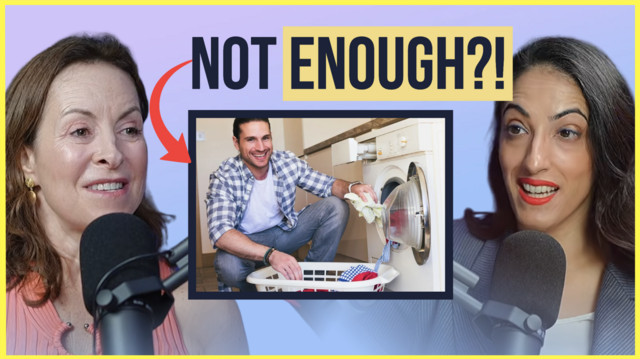
- Communication about household chores
- Scheduling time for intimacy
Open the episode on YouTube to jump to a chapter directly.
From the Blog
Moment: Why So Many Couples Stop Having Sex (And How to Want Each Other Again)
Published
Why So Many Couples Stop Having Sex—And How to Want Each Other Again
If you’ve been in a long-term relationship, you might recognize this scenario: the passion that once felt effortless has gradually faded. Sex feels like an obligation. Or maybe it’s disappeared entirely. You’re not alone—this is one of the most common issues I hear about in my practice, and it affects couples across every culture, socioeconomic background, and age group. The good news? It’s not permanent. Understanding why this happens—and what to do about it—can help you reignite desire and reconnect with your partner.
The Bedroom Gap Is Universal (And It Starts With Shame)
After 30 years of clinical practice and 85,000+ patient visits, I’ve seen a striking pattern: couples can spend decades together, raise children, navigate financial crises and loss, and yet never truly communicate about sex. They fall into a predictable routine—kiss, cuddle, penetrate, ejaculate, sleep—without ever discussing what they actually enjoy, what they don’t like, or what they need.
What’s even more universal than the problem itself is the shame surrounding it. Women especially have been socialized for centuries to be givers, pleasers, and servers. Many feel that prioritizing their own sexual pleasure is selfish. Men, meanwhile, often carry the belief that “real sex” means penetration—and that anything else somehow doesn’t count.
These cultural narratives shape how we show up in the bedroom. We inherit expectations about what we’re “supposed” to do, and we perform those roles rather than creating authentic connection. The first step toward change is unhooking from that shame and recognizing that wanting sex, and wanting pleasure, is not selfish—it’s human.
Rediscover Pleasure Beyond Penetration
One of the most liberating conversations I have with patients is about redefining what sex actually is. Most women need clitoral stimulation to orgasm—this isn’t controversial, it’s anatomy. And yet, many men (and women) believe that sex hasn’t “really” happened unless there’s penetration involved.
This belief creates a trap: if a woman is sexually averse or burnt out, she often anticipates that any physical affection will lead to penetration, which might involve pain or pressure. So she avoids touch altogether. He interprets that avoidance as rejection. The cycle continues.
The solution? Expand your definition of sex. There are countless ways to experience pleasure, intimacy, and even orgasm that don’t involve a penis in a vagina. Explore what actually feels good to both of you. Maybe that’s oral sex, manual stimulation, sensual massage, or simply extended foreplay. When you give yourselves permission to play outside the traditional box, you often rediscover why you wanted each other in the first place.
Start G-Rated and Build From There
If you’re at zero—meaning you genuinely don’t want sex and can’t imagine wanting it—jumping straight to intense sexual experiences is a recipe for failure. Instead, start small.
I often suggest the “chocolate bar visit” to my patients. It sounds simple because it is: pick a beautiful, high-quality chocolate bar. Slowly unwrap it. Notice the texture of the wrapper, the sound it makes, the aroma. Then taste it mindfully. The point isn’t about chocolate—it’s about remembering that pleasure exists in sensory experiences, and that pleasure doesn’t have to be sexual to be valuable.
Apply this principle to your relationship:
- Start with G-rated physical affection: cuddling in an oversized chair, holding hands, gentle touches on the arm or leg
- Leave your phones outside the bedroom and outside your intimate space
- Reminisce about a time when things were good—a vacation, a specific memory, a moment when you felt connected
- Talk about anything except stressors: no politics, taxes, bills, or to-do lists
- Remember how nice it feels to have skin touch skin, even if it’s just your toes against theirs
These “crumbs” of connection are the foundation. From there, you can gradually build toward more. But rushing the process almost always backfires.
Foreplay Isn’t Just One Moment—It’s a Lifestyle
Here’s something that changed how many of my patients think about desire: foreplay doesn’t start in the bedroom at night. It starts in the morning.
Think of building desire like maintaining a savings account for your brain. Every erotic image, story, or fantasy you consume gets stored in your mental database. When you read an article about sex, watch a scene in a movie, or listen to an audiobook, your brain catalogs it. Later, when you touch your partner—even casually—your brain makes connections to that erotic content, and you feel a spark of arousal you might not have expected.
This is why small moments matter so much. A compliment in the morning. A text message during the day that references an inside joke or a shared memory. A gentle touch on the shoulder when you pass in the kitchen. The way you notice their scent, the contour of their muscle, the delicacy of their skin. These aren’t “not sex”—they’re foreplay building all day long.
For many women, this also means creating space for personal pleasure. Reading erotica, watching films with erotic content, or listening to erotic audio stories—privately or together—helps cultivate that erotic energy. It’s not about replacing your partner; it’s about building the mental and emotional environment where desire can grow.
How to Start the Conversation (Without Making It Worse)
The hardest part for most couples isn’t the physical reconnection—it’s having the first conversation about it. Shame, fear of judgment, and years of unsaid things can make this feel impossibly difficult.
Here’s what I tell my patients: the location matters. Have this conversation in the car while driving or on a walk. Why? Because you can’t see each other’s faces as clearly, which removes some of the pressure and fear of judgment. Walking also activates your parasympathetic nervous system through deeper breathing, naturally relaxing you both. There are also natural pauses in conversation that don’t feel awkward.
Start with a compliment and a positive memory. Don’t begin by saying what’s wrong or what you’re missing. Instead, try something like: “I was thinking about that trip to the mountains, and I remembered how much I loved that we had time to be together in the morning. We don’t seem to have space for that anymore, and I’d love to find a way to recreate some of that feeling, even if we can’t go on vacation. There was something about that time that felt really special to me, and I appreciated how thoughtful you were.”
Between the lines, you’re making a request. You’re expressing appreciation. And you’re creating space for your partner to respond without feeling attacked or blamed.
The Path Forward
Rekindling desire after it’s faded isn’t about forcing passion back into your relationship. It’s about understanding the forces that shaped your sexual script—society, culture, healthcare, media—and then consciously rewriting that script together.
It’s about unhooking from shame. It’s about redefining pleasure. It’s about creating safety and curiosity instead of pressure and obligation. And it’s about recognizing that you and your partner deserve to feel that spark again—not because it’s your “duty,” but because you’re worth it.
Start small. Start G-rated. Start with a conversation in the car. And remember: the fact that you’re thinking about this means you care about the relationship and about your partner. That’s where all good things begin.
Want more from Dr. Malik? Subscribe on Substack →
WEBSITE: http://www.renamalikmd.com
YOUTUBE: https://www.youtube.com/@RenaMalikMD
INSTAGRAM: http://www.instagram.com/RenaMalikMD
TWITTER: http://twitter.com/RenaMalikMD
FACEBOOK: https://www.facebook.com/RenaMalikMD/
LINKEDIN: https://www.linkedin.com/in/renadmalik
PINTEREST: https://www.pinterest.com/renamalikmd/
TIKTOK: https://www.tiktok.com/RenaMalikMD
Premium Member Content
Full transcripts are available to Premium members.
Become a member to read the complete transcript of this episode (and every episode), plus get ad-free listening, member-only content, and behind-the-scenes access.