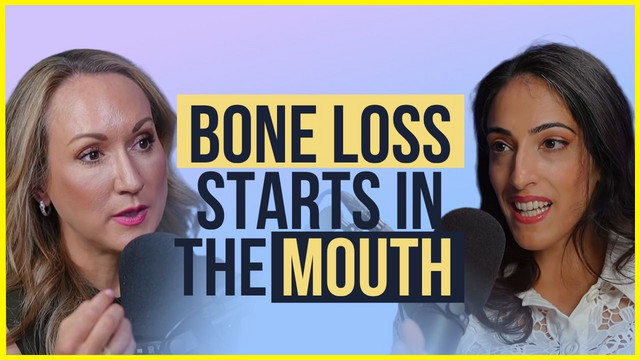
Moment: How Does Menopause Change Your Mouth—And Why Should You Care?
In this episode, Dr. Rena Malik, MD and Dr. Katie Lee discuss the powerful connections between oral health, sexual function, and overall well-being. They highlight how issues like sleep apnea, gum disease, and menopause-related changes can impact sexual health and increase risks for heart disease and cognitive decline, offering expert insights for maintaining both oral and whole-body health.
Listen on
In this episode, Dr. Rena Malik, MD is joined by Dr. Katie Lee to explore the surprising connections between oral health, sexual function, cardiovascular risk, and cognition. Their conversation highlights how issues such as sleep apnea, menopause-related changes, and gum disease can impact everything from erectile function to dementia risk. Listeners will gain evidence-based insights into why oral health is essential for overall wellness, with practical advice for supporting neurological and sexual health.
- Sleep Apnea and Erectile Dysfunction
- Oral Health and Female Sexual Function
- Dry Mouth, Menopause, and Gum Disease
- Gingivitis vs Periodontitis
- Bone Loss and Oral Health
- Periodontal Disease and Heart Health
- Brushing and Cardiovascular Risk
- Why Bleeding Isn’t Normal
- Deep Cleanings Explained
- Oral Microbiome and Brain Health
Open the episode on YouTube to jump to a chapter directly.
From the Blog
Moment: How Does Menopause Change Your Mouth—And Why Should You Care?
Published
How Menopause Changes Your Mouth—And Why It Matters for Your Overall Health
When we think about menopause, our minds typically jump to hot flashes, night sweats, and vaginal dryness. But here’s something most women—and even many doctors—don’t realize: menopause affects your mouth just as dramatically as it affects your vagina. The same tissues, the same hormones, the same consequences. And if you’re not paying attention to your oral health during this transition, you could be setting yourself up for serious health problems down the road.
As a urologist and pelvic health expert, I see the effects of menopause on the vulva and vagina every single day. What surprised me most when I learned about the oral changes is how parallel the process truly is. The tissues are literally the same. And the implications? They’re significant—not just for your teeth and gums, but for your heart, your bones, and your overall wellbeing.
The Estrogen Connection: Why Your Mouth Dries Out During Menopause
Let me start with the most obvious change: dry mouth. If you’re perimenopausal or menopausal and suddenly feeling like your mouth is a desert, you’re not imagining things. Your salivary glands are estrogen-dependent. When estrogen drops—which is the hallmark of menopause—your salivary glands simply stop producing saliva at the rate they used to.
This isn’t just an uncomfortable inconvenience. Saliva is your mouth’s first line of defense. It protects your teeth, buffers acids, fights bacteria, and maintains the integrity of your oral tissues. Without it, everything starts to fall apart.
Same Tissue, Same Problem: Atrophy in Your Mouth and Beyond
Here’s what blew my mind: the tissue changes in your mouth during menopause are virtually identical to the changes happening in your vulva and vagina. The tissue becomes thinner, drier, more fragile, and more prone to breakdown. Just as we see vulvar and vaginal atrophy in postmenopausal women, we see the exact same process in the mouth.
The barrier tissues start to break down. The tissues atrophy. And when this happens, small ulcerations and injuries become more likely. Those tiny breaks in the barrier? That’s how bacteria from your mouth get into your bloodstream and travel throughout your body—triggering inflammation everywhere.
The Cascade of Oral Problems: From Cavities to Gum Disease
Because of the hormonal changes and tissue breakdown I just described, menopausal women experience a dramatic increase in oral health problems:
- Cavities: Women who’ve never had a cavity in their lives suddenly start getting them. This is often the first sign someone is entering perimenopause or menopause.
- Bad breath: Dry mouth creates the perfect environment for odor-causing bacteria.
- Gum inflammation: Your gums become inflamed and irritated, leading to gingivitis (reversible inflammation of the gum tissue) or periodontitis (irreversible bone loss around the teeth).
- Accelerated bone loss: Estrogen is crucial for bone metabolism. When it drops, bone loss accelerates not just in your spine and hips, but in your jaw as well.
The timing matters too. We see the biggest drop in oral health during the perimenopausal transition and early menopause. Once you’re fully postmenopausal, the decline stabilizes—though the damage is already done. This is different from vaginal atrophy, which continues to worsen over time.
The Dangerous Connection Between Gum Disease and Heart Disease
Now here’s where this gets really serious. Periodontal disease—actual infection and inflammation in your gums and the bone around your teeth—is directly linked to cardiovascular disease. The bacteria from your infected gums don’t stay in your mouth. They get into your bloodstream and damage the endothelium, the inner lining of your blood vessels.
When periodontal bacteria damage your blood vessel lining, several things happen:
- They disrupt endothelial function and barrier integrity
- They make the vessel lining stickier, promoting plaque accumulation
- They reduce nitric oxide production, which we need for healthy blood vessel relaxation and blood flow
- They activate the platelet system, increasing clotting risk
The statistics are sobering: People with periodontal disease have approximately a 24% increased risk of any major cardiovascular event, a 26% increased risk of stroke, and a 42% increased risk of cardiac death.
Think about this: You’re already at increased cardiovascular risk during menopause due to declining estrogen. Add untreated gum disease to the mix, and you’re compounding that risk significantly.
Bone Loss in the Jaw: A Double Hit for Menopausal Women
Menopausal women face a unique challenge with bone loss. Not only does declining estrogen trigger systemic bone loss (increasing osteoporosis risk), but it also causes specific bone loss around the teeth. This happens through two mechanisms:
Direct bone loss from inflammation: The chronic inflammation from oral dysbiosis and gum disease literally kills the bone around your teeth. This isn’t reversible. Once that bone is gone, it’s gone.
Accelerated loss in already-compromised bone: If you already have osteopenia or osteoporosis, your jaw bone is less dense to begin with. Add oral inflammation to the mix, and you lose bone even faster than someone without systemic bone loss.
As the bone around your teeth recedes, the root surfaces become exposed. Tooth roots are covered in cementum, not hard enamel. Cementum is porous and highly prone to decay and sensitivity. This is why menopausal women often experience root cavities and increased tooth sensitivity.
Practical Steps to Protect Your Oral Health During Menopause
The good news? You can take action to minimize these risks:
- Chew sugar-free gum: This stimulates saliva production, which is crucial for protecting your teeth and fighting bacteria. Look for gum sweetened with xylitol, which is safe and actually has antimicrobial properties.
- Be aggressive about oral hygiene: Brush twice daily, floss daily, and consider using an antimicrobial rinse if your dentist recommends it.
- See your dentist regularly: During perimenopause and menopause, consider more frequent dental cleanings—every 3 months instead of every 6 months—to catch problems early.
- Address the microbiome: Talk to your healthcare provider about maintaining a healthy oral microbiome. This might include probiotics designed for oral health or other interventions.
- Consider your overall estrogen status: If you’re on hormone replacement therapy (HRT) for menopausal symptoms, you’re likely helping your oral health too. The tissues that depend on estrogen—in your mouth and elsewhere—benefit from HRT.
- Monitor for warning signs: If you suddenly start getting cavities, notice bleeding gums, experience bad breath, or see changes in your teeth or gums, talk to your dentist about whether menopause might be playing a role.
The Bigger Picture: Oral Health Is Systemic Health
What I want you to understand is this: Your mouth isn’t separate from the rest of your body. The bacteria living in your mouth, the inflammation brewing in your gums, the bone loss happening around your teeth—all of it affects your cardiovascular health, your immune system, and your overall wellbeing.
For menopausal women, this connection is even more critical. You’re already navigating significant hormonal changes. You’re already at higher risk for heart disease, bone loss, and metabolic changes. The last thing you need is chronic oral inflammation adding fuel to that fire.
By being proactive about your oral health during menopause—staying vigilant about brushing, flossing, and dental visits, and addressing any changes with your dentist and doctor—you’re protecting not just your teeth, but your heart, your bones, and your long-term health.
Want more from Dr. Malik? Subscribe on Substack →
INSTAGRAM - https://www.instagram.com/katieleedds/?hl=en
https://www.instagram.com/thecollectivehealthsociety/
FACEBOOK - https://www.facebook.com/katieleedds/
X - https://x.com/drkatiemccannl1
WEBSITE - https://katieleedds.com/
https://www.collectivehealthsociety.com/post/welcome-to-collective-health-society/
YOUTUBE - https://www.youtube.com/shorts/NCNsnkcr3wc
WEBSITE: http://www.renamalikmd.com
YOUTUBE: https://www.youtube.com/@RenaMalikMD
INSTAGRAM: http://www.instagram.com/RenaMalikMD
TWITTER: http://twitter.com/RenaMalikMD
FACEBOOK: https://www.facebook.com/RenaMalikMD/
LINKEDIN: https://www.linkedin.com/in/renadmalik
PINTEREST: https://www.pinterest.com/renamalikmd/
TIKTOK: https://www.tiktok.com/RenaMalikMD
Premium Member Content
Full transcripts are on Supercast.
Transcripts are posted with each episode for Premium members, along with ad-free listening, member-only content, and behind-the-scenes access.